

Wedoany.com Report-Mar 7, U.S.-based energy tech company Baker Hughes is joining with Australia’s Woodside Energy in an initiative to develop a lower-carbon power generation technology solution specifically designed for oil and gas, heavy industries, and other smaller-scale applications.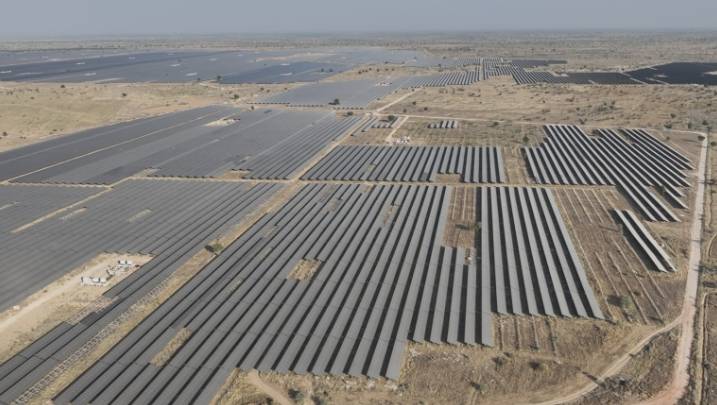
The companies on March 6 said the framework of their collaboration framework focuses on assessing feasibility and scalability of Net Power’s platform, and is open to other potential contributors.
Baker Hughes and Woodside are building on their 2022 memorandum of understanding that aimed to advance the decarbonization of the natural gas supply chain. Baker Hughes and Woodside have now signed a technology development agreement (TDA) for the small-scale NET Power platform. The patented NET Power platform works by utilizing natural gas to generate affordable power while inherently capturing nearly all carbon dioxide emissions.
Baker Hughes and Woodside on Thursday said they want to bring other development partners into the program to tailor the con
A new report by SBICAPS projects India’s annual solar capacity addition to double to 30 GW in fiscal 2025 against 15 GW in fiscal 2024.
The report states the deployment pace will further improve in fiscal 2026 and fiscal 2027, leading to significant spike in module demand. It projects PV deployment for fiscal 2026 at 42 GW and for fiscal 2027 at 46 GW, with residential rooftop solar driving expansion.
Annual module demand is forecast to increase from 50-55 GW in fiscal 2025 to 105 GW in fiscal 2027. [The calculation assumes DC/AC overloading of 1.2-1.4, effective utilization to nameplate capacity ratio of 55% to 65%.]
The report says PV installation projections are likely to be met with moderate PPA-PSA gap reduction, PM Surya Ghar Muft Bijlee Yojana (PM-SGMBY) completion by FY28, and enhanced RPO [renewable energy purchase obligation] compliance. Timely scheme (especially PM-KUSUM) and project execution could further augment demand. On the other hand, land constraints, ALCM [Approved List of Cell Manufacturers] implementation, and restrictive state net metering policies pose as deterrents.
The report says the integration drive needs to kick into next gear to meet ALCM and DCR goals. [DCR solar panels are panels made in India with domestically manufactured cells, meeting the domestic content requirement as stipulated for PV installations under PM Surya Ghar Muft Bijlee Yojana, PM KUSUM and CPSU Phase II Scheme.]
“Despite integration factor (cell/module capacity ratio) likely improving from 32% to 65%, more than half of India’s cell requirements will continue to be imported in FY27, even if all capacities promised come on board,” states the report.
DCR module prices will maintain a premium due to PM-SGMBY-driven demand exceeding cell capacity additions and escalating regulatory stringency on DCR. As cell production expands, wafer and ingot manufacturing emerge as the next strategic imperative, with the government expected to allocate $ 1 billion in incentives to foster domestic ecosystem development.
cept to the continuously evolving requirements of different captive power generation segments. Through the TDA, the program will also focus on assessing feasibility and industrial market scalability of NET Power’s platform.
Baker Hughes is the exclusive provider of the small-scale application of the NET Power platform, and the TDA will benefit from the development and testing currently ongoing both at NET Power’s La Porte, Texas, demonstration facility and the company’s planned first utility-scale power plant near Midland, Texas.
“We are excited to continue our collaboration with Baker Hughes and leverage their leading-edge technology and our combined engineering and CCUS capabilities to explore and develop lower-carbon emissions alternative power solutions using Net Power’s platform,” said Julie Fallon, Woodside executive vice president Technical and Energy Development. “This agreement further strengthens our long-standing relationship across the natural gas value chain and our shared journey in the energy transition.”
“Baker Hughes is committed to providing innovative solutions that support the decarbonization of the energy and industrial sectors, and we are honored to share this journey with our long-standing customer Woodside Energy,” said Alessandro Bresciani, senior vice president of Climate Technology Solutions at Baker Hughes. “We believe this framework represents the partnerships and collaborations necessary to develop and scale the energy solutions that support decarbonization while also meeting the world’s growing energy demand.”
“Net Power applauds the enhanced collaboration between Woodside and our partner Baker Hughes. This work has the potential to bring our technology platform to a broader array of end markets and applications, complementing our utility-scale program and strategy,” said Danny Rice, CEO of NET Power, which is headquartered in North Carolina. “Today’s announcement is a tangible commitment to continue technology innovation and market development for the Net Power platform and to bring ultra-low emissions energy solutions to a power-hungry world.”







 京公网安备 11010802046720号