

Wedoany.com Report-Apr. 26, The Central Agricultural Research Institute (CARI) in Liberia hosted a Field Day to introduce ten new upland rice varieties. Organized by AfricaRice, CARI, and the Ministry of Agriculture, with support from the European Union, the event was part of the Seeds4Liberia Project under the "From Productivity to Product" initiative. Farmers, researchers, policymakers, and donors attended to assess the varieties for their grain quality, aroma, and field performance.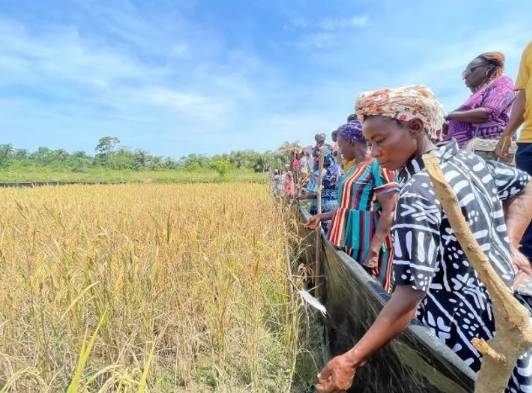
These rice varieties, developed through research backed by the Bill & Melinda Gates Foundation, are designed to resist drought and pests while delivering high yields and quality grains, supporting climate resilience and enhanced agricultural output. Participants favored varieties ART34-88-1-2-B-1, ART34-120-1-2-B-1, and ART34-113-3-2-B-1 for their exceptional traits, with ART27-190-6-1-4-2-2-1 also noted for its similarity to the well-known NERICA 4.
Dr. Arthur Bob Karnuah, CARI’s Director General, stated: “These innovations are vital for achieving national food self-sufficiency.” Mr. Antonio Di Clemente from the EU Delegation added: “This collaboration strengthens Liberia’s agricultural resilience.” Dr. Akintayo Inoussa, AfricaRice’s Country Representative, highlighted the varieties’ adaptability to both upland and lowland environments, advancing climate-smart farming. Stakeholders pledged to expand seed production, streamline variety registration, and enhance farmer training to support Liberia’s goal of a sustainable rice sector.
Launched in 2024, the EU-funded Seeds4Liberia Project targets rice, cassava, coffee, soybeans, and fish value chains. It aims to build farmer capacity, support private seed enterprises, and strengthen government agencies. The project collaborates with AfricaRice, the International Institute of Tropical Agriculture, WorldFish, the Ministry of Agriculture, CARI, the National Fisheries and Aquaculture Authority, and the Liberia Agriculture Commodity Regulatory Authority. It plans to cultivate 4,200 hectares for seed production, yielding 3,000 tons of certified rice seeds, 62,500 cassava bundles, 4,800 tons of soybeans, 1.1 million coffee seeds, and 45 million fish fingerlings, boosting agricultural productivity and sustainability.






 京公网安备 11010802046720号