

Wedoany.com Report-Aug. 27, As of June 2025, wheat stocks across the UK have significantly decreased, with record-high grain imports helping to offset the sharpest decline in domestic supplies in nearly a decade. According to the Department for Environment, Food & Rural Affairs (Defra), wheat held by merchants, ports, co-operatives, and farms in England and Wales totaled 651,000 tonnes, a 44% drop from 1.166 million tonnes in June 2024 and 18% below the five-year average. This marks one of the lowest levels in a decade, surpassed only by 403,000 tonnes in 2021.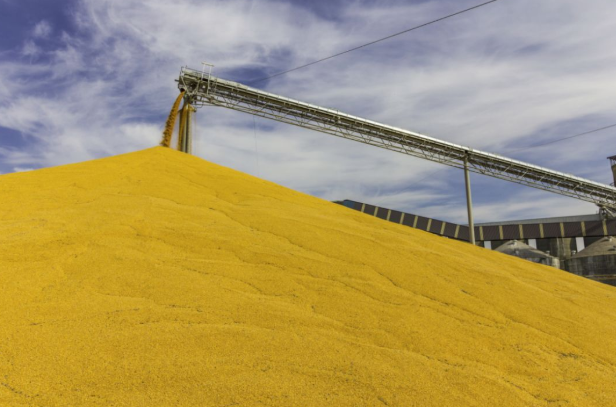
The Agriculture and Horticulture Development Board (AHDB) reported a 39% decline in commercial wheat stocks held by merchants, ports, and co-operatives, amounting to 494,000 tonnes compared to the previous year. Overall, wheat stocks were 35% lower than in June 2024 and 12% below the five-year average. Despite this, imports of wheat surged to 303,000 tonnes by June’s end, reflecting a 21% year-on-year increase, helping to balance the reduced domestic supply.
AHDB’s earlier forecast for the 2024/25 season estimated total UK commercial wheat stocks at 2.94 million tonnes, a 2% decrease from the prior year. Industry analysts suggest that the constrained wheat supply could support domestic prices in the 2025/26 marketing year, though global market trends may temper this effect.
In contrast, other cereals showed stronger performance. Commercial stocks of home-grown barley increased by 21% and oats by 70% compared to June 2024. On-farm barley stocks in England and Wales fell 7% to 135,000 tonnes, while oat reserves rose significantly from 16,000 tonnes in 2024 to 51,000 tonnes in 2025.
A Defra spokesperson stated: “The significant decline in wheat stocks highlights the challenges faced by domestic producers, but the rise in imports and robust stocks of other cereals demonstrate the resilience of the UK’s agricultural supply chain.”
The surge in imported wheat underscores the UK’s reliance on global markets to meet consumption needs amid lower domestic production. The mixed performance of barley and oats reflects varying trends in cereal supply, with oats showing notable growth. These dynamics highlight the importance of diversified sourcing to ensure stable food supply chains.
The UK’s agricultural sector continues to adapt to changing supply conditions, balancing domestic production with imports to meet demand. The increase in barley and oat stocks, alongside strategic wheat imports, supports the stability of the UK’s cereal market, contributing to food security and price stability in the face of global market fluctuations.












 京公网安备 11010802046720号