

Wedoany.com Report-Oct. 19, Danish shipping giant Maersk has launched onboard fuel trials using a methanol-ethanol blend as part of its efforts to explore alternative fuels for decarbonising global shipping. The tests are being conducted on the 2,100 TEU containership Laura Maersk, which became the world’s first container vessel to operate on green methanol in 2023.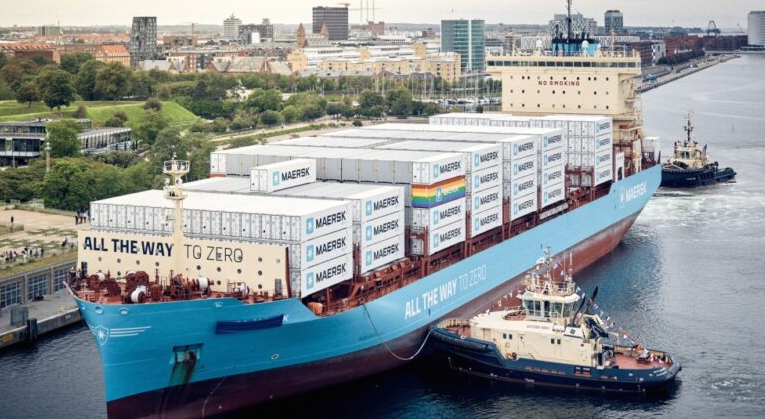
The trial involves an E10 fuel blend, comprising 10% ethanol mixed with 90% methanol. The purpose is to evaluate ethanol’s performance in dual-fuel marine engines and assess its potential contribution to Maersk’s future fuel mix. Operational parameters under observation include ignition quality, combustion behaviour, lubricity, NOx emissions, and any differences compared with standard methanol.
Peter Normark Sørensen, senior fuel transition manager at Maersk, said: “The reason for blending it is to enlarge the availability and the sourcing pool for dual-fuel vessels.” The E10 blend supplied to the vessel is expected to last about one to one and a half months, after which Maersk will determine the next steps for further testing.
The Laura Maersk is considered suitable for small-scale trials, allowing insights to be applied to other dual-fuel vessels in the fleet. Maersk emphasises that these tests are part of its broader strategy to reduce greenhouse gas emissions and explore viable alternative fuels for commercial shipping operations.
The company monitors all aspects of engine performance and environmental impact during these trials, aiming to gather data to guide future fuel strategies. The use of methanol-based fuels has already demonstrated potential for lowering carbon emissions compared with conventional marine fuels, and the addition of ethanol seeks to further expand fuel options.
Maersk’s dual-fuel vessels are part of a growing global trend towards decarbonisation in the shipping sector. By testing blends like E10, the company aims to identify scalable solutions that maintain operational reliability while reducing the environmental footprint of maritime transport.
The findings from the Laura Maersk trials are expected to inform the adoption of alternative fuels across Maersk’s fleet, supporting the company’s ongoing commitment to energy transition. These trials also provide a framework for other shipping operators to explore similar dual-fuel approaches, combining methanol and ethanol in marine applications.
Overall, Maersk’s initiative reflects a stepwise approach to evaluating new fuel technologies, balancing technical feasibility, environmental benefits, and operational performance, with the goal of establishing more sustainable shipping practices.











 京公网安备 11010802046720号