

Wedoany.com Report-Oct. 14, South Africa, a consistent net importer of wheat, began its 2025-26 marketing year on October 3, with initial imports totaling 20,362 tonnes. The primary suppliers for this period were Australia, contributing 53 percent, Lithuania with 43 percent, and Poland providing 5 percent. Forecasts indicate that South Africa’s wheat imports for the 2025-26 marketing year will reach approximately 1.74 million tonnes, a slight decrease from the 1.83 million tonnes imported in the 2024-25 marketing year. This reduction is attributed to a modest improvement in the domestic wheat harvest.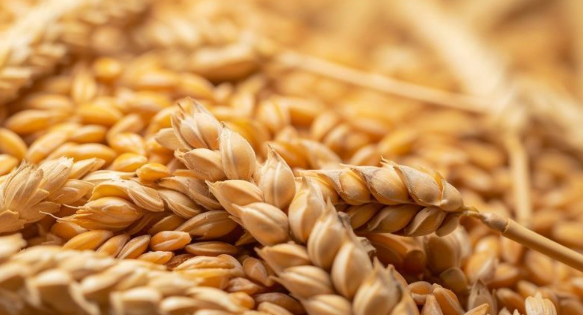
Historically, South Africa’s reliance on wheat imports grew significantly starting in the 2003-04 marketing year, when annual imports exceeded one million tonnes. Prior to this, from 1989-90 to 2002-03, imports averaged 458,518 tonnes annually. The increase in imports since the early 2000s reflects rising domestic consumption and a reduction in wheat-planted areas, particularly in the Free State, where profitability challenges and less favorable climatic conditions have prompted farmers to shift to alternative crops.
Before the 1997-98 season, South Africa’s wheat cultivation regularly covered over one million hectares, supported by regulated agricultural markets and commodity boards that set prices. Following market deregulation, farmers faced global competition, which strained profitability in key regions like the Free State. Other provinces, such as the Western Cape, Northern Cape, Limpopo, and North West, have limited areas suitable for high-quality wheat production suited for human consumption, further constraining domestic output.
Despite these challenges, advancements in agricultural practices have boosted wheat productivity. In the 1997-98 season, yields were below 2.0 tonnes per hectare, but by the 2024-25 season, they had risen to 3.8 tonnes per hectare. This improvement has supported relatively robust production levels, with the 2021-22 harvest reaching 2.3 million tonnes, the largest in two decades. For the 2025-26 season, South Africa’s wheat production is projected at 2.03 million tonnes, which remains insufficient to meet the country’s annual wheat consumption of approximately 3.8 million tonnes.
To bridge this gap, imports of around 1.74 million tonnes are anticipated for 2025-26, covering roughly half of South Africa’s wheat needs. The combination of domestic production and imports ensures a stable supply for the country’s consumption requirements. Ongoing improvements in yield and strategic crop management continue to support the sector’s resilience, even as imports remain a critical component of the wheat supply chain.









 京公网安备 11010802046720号