

Wedoany.com Report-Oct. 19, Etex and Heidelberg Materials have partnered on CEMLOOP XL, an industrial-scale project supported by the EU LIFE Programme, aiming to create the first fully circular solution for fibre cement. The initiative integrates advanced recycling and carbon capture, utilisation and storage (CCUS) technologies to minimize the environmental impact of cement production and promote circular construction practices across Europe.
Through CEMLOOP XL, the two companies seek to close the material loop in fibre cement manufacturing by converting production and construction waste into high-quality secondary raw material. This recycled material can replace clinker, a major component in traditional cement, thus helping to produce low-carbon cement and reduce dependence on virgin raw materials. The collaboration demonstrates a major step toward carbon-neutral and resource-efficient manufacturing in the building materials sector.
As part of the project, Etex, in partnership with the Jacobs Group, is developing an innovative recycling process that transforms fibre cement waste into recycled fibre cement paste (RFCP). The company is constructing a new recycling facility in Hemiksem, Belgium, which is expected to start operations by mid-2026. The facility will process waste from both Etex’s own production lines and the broader construction industry, providing a scalable model for fibre cement recycling.
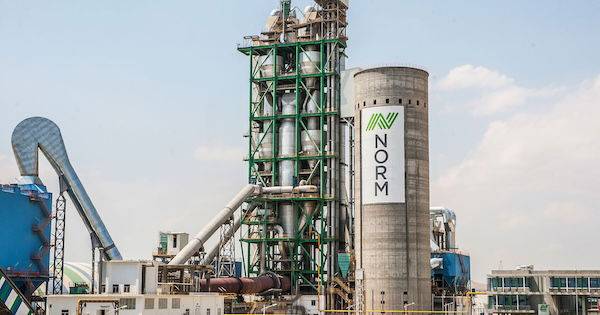
Meanwhile, Heidelberg Materials is advancing the CCLIX process at its Lixhe plant in Liège, Belgium. This process upgrades RFCP through enforced carbonation using CO₂ captured from kiln exhaust gases. The resulting material—carbonated RFCP (cRFCP)—regains cementitious properties, enabling it to be reused in manufacturing new, lower-carbon fibre cement products. A dedicated carbonation reactor is scheduled to be commissioned by 2028, marking a technological milestone in industrial carbon recycling.
The project’s anticipated environmental benefits are substantial. It is expected to prevent around 60,000 tonnes of fibre cement waste annually, save 100,000 tonnes of limestone, reduce CO₂ emissions by at least 20 per cent, and lower energy consumption by about 15 per cent. These achievements would contribute significantly to Europe’s transition toward sustainable construction materials and circular resource management.
“This is a significant step toward new generations of sustainable cements,” said Serge Montagne, Technical Director at Heidelberg Materials Benelux. Eric Bertrand, Chief Innovation Officer at Etex, added: “For the first time, fibre cement will follow a fully circular journey—proof that innovation and sustainability can go hand in hand.”
Overall, CEMLOOP XL represents a comprehensive effort to align industrial production with circular economy goals, combining technological innovation, recycling efficiency, and carbon reduction to redefine how fibre cement products are produced and reused in Europe’s construction industry.









 京公网安备 11010802046720号