

Wedoany.com Report-Nov. 17, BHP, a diversified mining company, has received Australia's initial custom-designed battery-electric locomotives. The two heavy-haul units reached Port Hedland for testing on the firm's iron ore rail system in the Pilbara region.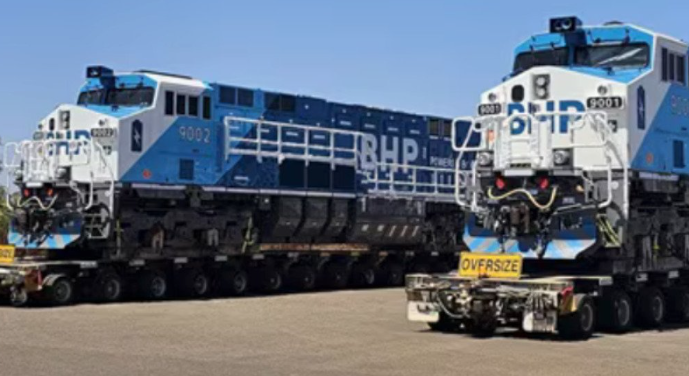
Created in collaboration with Wabtec, these fully electric-powered locomotives will transport materials between BHP's Pilbara mining sites and Port Hedland facilities. Engineered to withstand high temperatures and rigorous operational demands, they aim to decrease diesel usage and reduce Scope 1 and 2 emissions.
Every unit features a 7 megawatt-hour battery pack along with regenerative braking systems. This technology recovers energy during descent braking and redirects it to recharge the battery.
Startup procedures are currently in progress. Following this, the locomotives will enter track evaluations to assess functionality in actual service environments.
“It’s incredible to see these battery-electric locos in Port Hedland – the first new models in Australia, and representing years of planning, problem solving and partnership," said Tim Day, asset president for BHP Western Australia Iron Ore.
“The Pilbara has always been a place of big ambition, and these locomotives represent the kind of innovation that is needed to keep the region firing.”
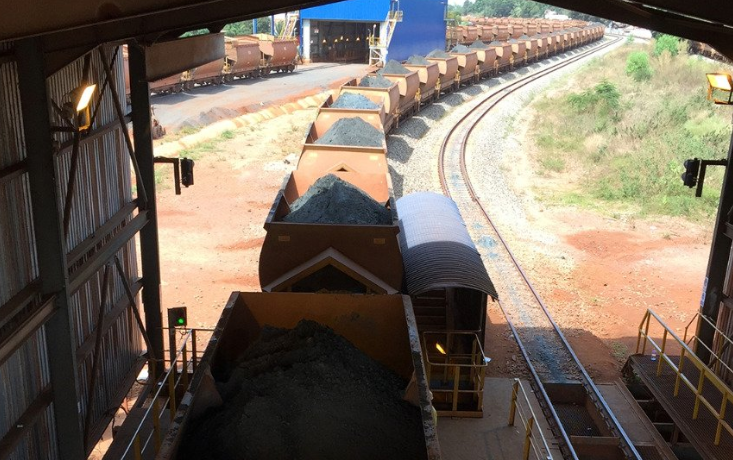
The arrival marks a step toward sustainable rail operations in one of the world's largest iron ore hubs. The Pilbara network spans thousands of kilometers, moving massive ore volumes daily to support global steel production.
Battery systems provide sufficient capacity for full shift cycles without recharging interruptions. Regenerative features enhance efficiency on routes with elevation changes, common in the terrain.
Trials will collect data on power management, thermal performance, and integration with existing infrastructure. Outcomes will inform potential fleet expansions and refinements.
Partnership with Wabtec leverages expertise in locomotive design and electrification. Joint development ensured compatibility with heavy-haul requirements, including traction power and durability.
Emission reductions align with broader decarbonization goals in mining logistics. Diesel displacement contributes to lower operational carbon footprints while maintaining productivity.
Commissioning involves safety checks, software calibration, and crew training. Operators will familiarize themselves with electric controls and monitoring interfaces.
Track tests simulate loaded and empty hauls, verifying speed, acceleration, and braking under varying loads. Dust and heat resistance will be closely monitored given the arid climate.
Successful validation could lead to broader adoption across BHP's rail assets. Scalability depends on battery lifespan, charging infrastructure, and cost comparisons.
The Pilbara's remote setting necessitates robust, low-maintenance solutions. These units incorporate modular components for easier servicing in field conditions.
Innovation in transport supports sustainable resource extraction. Electric locomotion offers quieter operation and reduced fuel logistics compared to traditional engines.
As trials advance, performance metrics will guide optimization. Real-world insights refine energy models developed during prototyping.
This initiative demonstrates practical application of clean technology in industrial settings. It positions BHP to lead in low-emission heavy transport within the sector.
Future phases may explore hybrid configurations or expanded battery capacities. Continuous improvement ensures alignment with evolving operational needs.
The locomotives' deployment reflects commitment to environmental stewardship alongside economic objectives. Balanced progress maintains the region's role as a key supplier in global markets.
Monitoring programs will track emission savings and reliability over extended periods. Data sharing with partners accelerates industry-wide advancements in rail electrification.






 京公网安备 11010802046720号