

Wedoany.com Report-Dec.4, Norway has agreed to suspend the issuance of deep-sea mining licences in its territorial waters until 2029, following a budget agreement reached on Tuesday between the governing coalition and the opposition Socialist Left Party.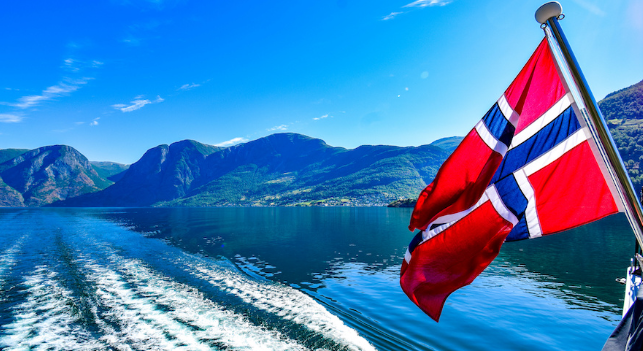
Norway has placed a moratorium on deep sea exploration in its water until 2029.
The moratorium delays a previous parliamentary decision made 18 months ago to open approximately 280,000 square kilometres of seabed for exploration, an area that included 386 offshore blocks covering about 38 percent of the designated zone. No commercial mining was scheduled to begin before 2030 in any case.
The decision reverses Norway's earlier plan to grant exploration permits this year, which had attracted applications from at least two companies. The government had viewed deep-sea mining in Arctic waters as a potential source of critical minerals—including copper, nickel, cobalt, and manganese—needed for clean energy technologies and other strategic applications.
Norway's pause contrasts with growing interest elsewhere. In April, the United States issued an executive order to accelerate offshore mining permits as part of efforts to strengthen domestic supply chains for essential minerals.
Shortly afterward, The Metals Company (Nasdaq: TMC) submitted applications under U.S. regulations for two exploration licences covering a combined 199,895 square kilometres and one commercial recovery permit for 25,160 square kilometres in the Clarion-Clipperton Zone of the central Pacific Ocean, between Hawaii and Mexico.
According to TMC's SEC SK 1300-compliant estimates, the targeted areas contain 1.63 billion wet metric tonnes of polymetallic nodules, with additional exploration potential of 500 million tonnes. These nodules are estimated to hold 15.5 million tonnes of nickel, 12.8 million tonnes of copper, 2 million tonnes of cobalt, and 345 million tonnes of manganese.
Other coastal states, including the Cook Islands and Japan, continue to advance deep-sea mineral exploration within their respective 200-nautical-mile exclusive economic zones.
Proponents of seabed mining argue that it can provide a more concentrated and potentially lower-impact source of critical metals compared with many land-based operations, while opponents highlight significant risks to deep-ocean ecosystems that remain poorly understood. Norway's decision to extend the pause reflects ongoing caution as scientific, environmental, and regulatory assessments continue.









 京公网安备 11010802046720号