

Wedoany.com Report-Dec.5, Amazon's strategic investments in fulfillment centers and delivery stations have solidified its role as a major participant in the United States parcel delivery sector, valued at nearly $193 billion. This market has traditionally been led by established carriers including United Parcel Service (UPS), FedEx, and the United States Postal Service (USPS).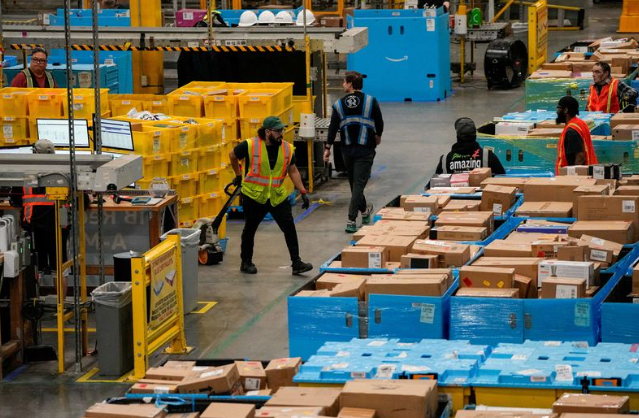
On Thursday, Amazon indicated it is engaging in talks with USPS regarding their ongoing partnership and evaluating potential alternatives ahead of the existing agreement's expiration next year.
Key aspects of the United States delivery landscape include:
- The courier and parcel sector is projected to expand to $239.38 billion by 2030, according to data from Mordor Intelligence.
- Amazon Logistics exceeded delivery volumes of both UPS and FedEx in 2024, per the Pitney Bowes Parcel Shipping Index.
- A total of 22.37 billion parcels were shipped domestically in 2024, with Amazon handling 6.3 billion, slightly below USPS's 6.9 billion, the index indicated.
- Forecasts from Pitney Bowes suggest Amazon will surpass USPS volumes by 2028, reaching 8.4 billion parcels.
- In terms of revenue share for 2024, Amazon held 15.3 percent, close to USPS's 15.8 percent.
- UPS intends to reduce the volume of Amazon shipments it processes by over 50 percent by 2026, reflecting adjustments in their collaboration.
- In April, Amazon committed more than $4 billion to enhance its rural delivery infrastructure across the United States by the end of 2026.
The USPS reported a net loss of $9.5 billion for fiscal year 2024, which ended on September 30. This figure includes significant non-cash expenses related to retiree pension liabilities and workers' compensation adjustments, which account for over 80 percent of the total. Excluding these non-controllable factors, the agency's controllable loss narrowed to $1.8 billion from $2.2 billion the previous year.
Operating revenue for USPS rose 1.7 percent to $79.5 billion, supported by price adjustments and growth in shipping and packages, which increased by 2 percent. First-Class Mail revenue grew 3.4 percent, and Marketing Mail rose 1.9 percent. Despite these gains, total operating expenses climbed 4.8 percent to $89.5 billion, driven by inflationary pressures on compensation, retirement costs, and other areas, though transportation expenses declined.
USPS continues to implement its 10-year Delivering for America plan, focusing on network modernization, cost efficiencies, and service improvements. Progress includes a 45 million-hour reduction in work hours over three years, yielding prospective annual savings of $2.3 billion, and $1.3 billion in transportation cost reductions for fiscal 2024.
The evolving dynamics underscore a competitive environment where innovation in logistics and e-commerce drives volume growth. Amazon's expansion in last-mile capabilities positions it to capture more share, while traditional operators adapt through pricing strategies and service enhancements. Overall, the sector's trajectory points to sustained demand, with projections estimating 30 billion parcels annually by 2030.












 京公网安备 11010802046720号