

Wedoany.com Report-Jun 2, Researchers from Italy’s University of Bologna have conducted a study simulating the integration of a floating photovoltaic (FPV) plant with the Etzelwerk, an open-loop pumped-storage hydropower (HP) facility in Switzerland’s pre-alpine region. The Etzelwerk, which generates electricity for the Swiss Federal Railways (SBB), utilizes a 480-meter elevation difference between Lake Sihl and Lake Zurich. The study explored the impacts of this solar-hydro hybrid system on water resource management over a 38-year period from 1981 to 2018.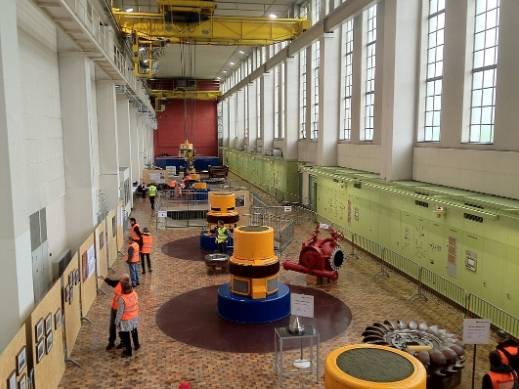
The Etzelwerk pumped hydro station in Switzerland
Domenico Micocci stated: “We analyzed the impacts of solar-hydro hybridization through a multi-disciplinary framework, particularly focusing on implications for water resources management.” He added: “Moreover, the research was carried out over a long-term simulation horizon of 38 years. This allowed for better characterization of hydro-climatic conditions that drive water availability and PV production.” The Etzelwerk currently features seven Pelton turbines with a 120-megawatt capacity and three 5-stage pumps totaling 54 megawatts, capable of pumping water from Lake Zurich to Lake Sihl.
The simulation assumed an FPV plant covering 10% of Lake Sihl, using monocrystalline panels with 20.4% efficiency, yielding a 64.12-megawatt nominal capacity over 0.315 square kilometers. Three scenarios were modeled: NoPV (hydropower only), PV1 (FPV contributes to demand, pumping, or excess energy sales), and PV2 (similar to PV1, with 50% of saved water released downstream during low-flow periods). The hydrological model incorporated meteorological data, and SBB provided demand levels.
Results showed a 20% increase in energy production with FPV integration. The NoPV scenario averaged 256.6 gigawatt-hours annually, while PV1 delivered 319.1 gigawatt-hours (257.7 from HP, 61.4 from PV) and PV2 provided 315.2 gigawatt-hours (254.1 from HP, 61.1 from PV). The hybrid system improved reliability, reducing the shortage index from 11.28% (NoPV) to 3.24% (PV1) and 3.53% (PV2). Micocci noted: “Thanks to hybridization, the plant fails to satisfy the demand much less than the conventional HP plant.”
In the PV2 scenario, additional water releases increased downstream discharge by 14% in May and up to 50% from June to August, supporting environmental flows without compromising energy benefits.








 京公网安备 11010802046720号