

Wedoany.com Report-Aug. 28, The Crete-Attica electrical interconnection, Greece’s largest electricity transmission project, has successfully completed a three-month testing phase, marking its final stage before commercial operation. The €1.1 billion project, managed by Ariadne Interconnection, a subsidiary of Greece’s Independent Power Transmission Operator (IPTO), connects the Attica region on the mainland to Heraklion in Crete.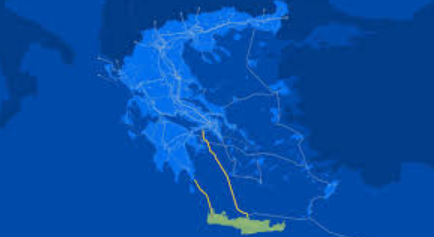
The interconnection features a 1,000 MW high-voltage direct current (HVDC) subsea cable system, with Nexans supplying one 500 MW cable and Prysmian providing the other 500 MW cable alongside two subsea telecom links. Construction began on May 24, 2025, with a trial operation phase conducted over the summer. On August 26, 2025, IPTO announced the successful completion of testing, confirming the system’s ability to support bidirectional energy flow under real-world conditions.
IPTO stated: “This milestone paves the way for the gradual decommissioning of polluting power plants on the island and the full integration of Crete into Greece’s unified electricity market model.” The system will now operate continuously for two months before entering full commercial operation, enhancing Crete’s energy security and reducing reliance on local fossil fuel-based power plants.
As one of the world’s three deepest electrical interconnections, the Crete-Attica link leads in power transfer capacity for island systems. It is expected to reduce annual CO2 emissions by 500,000 tons, supporting Greece’s sustainability goals. The project integrates Crete into the national electricity grid, ensuring a stable and efficient energy supply for the island.
Funding for the project includes €535.5 million from the Operational Programme “Transport Infrastructure, Environment and Sustainable Development” (NSRF 2014–2020) and the “Environment and Climate Change” program (NSRF 2021–2027). This financial support underscores the project’s role in advancing Greece’s infrastructure and environmental objectives.
The interconnection strengthens Crete’s energy infrastructure by enabling efficient power transfer from the mainland, reducing energy costs, and promoting cleaner energy solutions. The collaboration between IPTO, Nexans, and Prysmian highlights advanced engineering capabilities, ensuring the system meets rigorous technical standards. The project’s completion marks a significant step toward modernizing Greece’s energy network and fostering sustainable development.
By integrating Crete into the national grid, the interconnection supports long-term energy reliability and economic growth. It positions Greece as a leader in innovative energy infrastructure, contributing to reduced emissions and enhanced connectivity for island communities.









 京公网安备 11010802046720号