

Wedoany.com Report-Sept. 17, Xpeng is set to diversify its battery supply for its Mona lineup by introducing Eve Energy as a second battery supplier, reducing its reliance on BYD, which has exclusively provided all batteries for the series until now. According to Jipian Lab, the change will see base versions of future Mona models equipped with Eve Energy prismatic cells, while long-range variants will continue using BYD's blade batteries.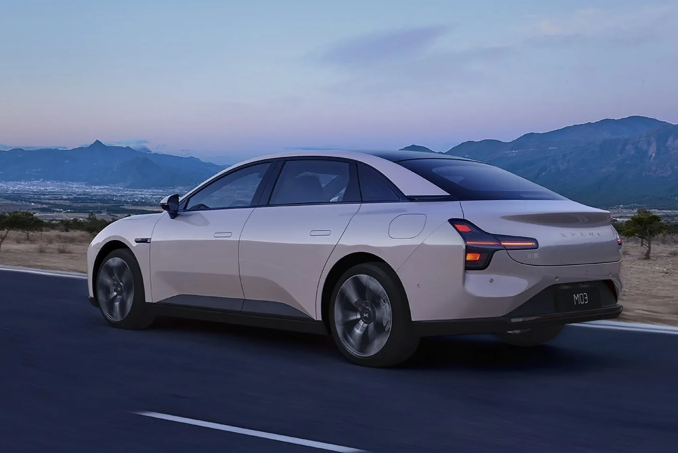
The Mona lineup currently includes the Mona M03 electric sedan, which launched in China in August 2024 with a starting price of RMB 119,800 (around €14,000). Developed in partnership with Didi, a Chinese ride-hailing company, the Mona M03 is available in three variants: 515, 620, and 580 Max, referring to their maximum range. The base version is equipped with a 140 kW motor and can accelerate from 0 to 100 km/h in 7.8 seconds, while the larger variants feature a 160 kW motor, reaching 100 km/h in 7.4 seconds.
As of August 2025, the Mona M03 remains Xpeng’s highest-volume model, with 15,334 units delivered that month, marking the twelfth consecutive month of deliveries above 10,000 units. This sedan alone accounted for 40.66% of Xpeng’s total monthly deliveries. Presently, all Mona variants rely on BYD’s blade battery.
Spy photos have revealed that Xpeng is preparing a second model in the Mona lineup—an SUV—which will feature design elements from the Mona M03. With the new dual-supplier battery strategy and the expected expansion of the Mona lineup, Xpeng aims to boost its presence in the highly competitive Chinese EV market.
By integrating multiple battery suppliers, Xpeng seeks to improve both cost control and supply security. In addition to BYD, Xpeng already works with CALB and Eve Energy for its broader model portfolio. CALB supplies most of the batteries for G6, G7, G9, and X9, while Eve Energy powers the P7+ and the 2024 X9. Additionally, Eve Energy is set to provide batteries for the extended-range version of the G7, as noted in regulatory filings.
According to the China Automotive Battery Innovation Alliance (CABIA), Eve Energy ranked fifth in China in July with 12.21 GWh of installed capacity, while BYD was second with 70.37 GWh, and CALB led the list with 128.6 GWh installed. This strategic move to diversify suppliers is expected to support Xpeng’s ongoing growth, particularly in the highly competitive EV sector.







 京公网安备 11010802046720号