

Wedoany.com Report-Oct. 11, The Port of Gothenburg has achieved a 30% reduction in carbon dioxide emissions during the construction of its Skandia Gateway quay, demonstrating that sustainable infrastructure development can be cost-effective. The project, located in Gothenburg, Sweden, incurred only a 1% increase in the total construction budget, highlighting the balance between environmental responsibility and financial efficiency.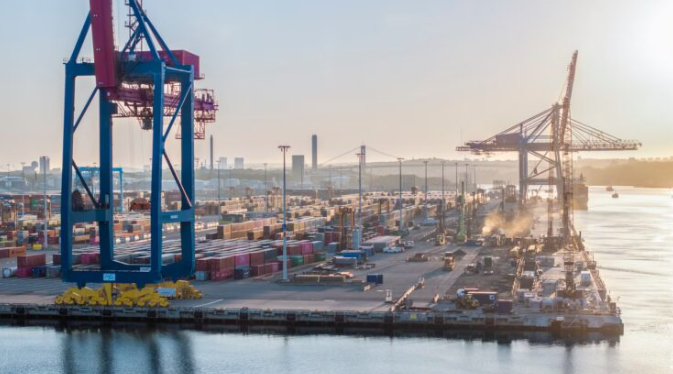
The port implemented specific procurement strategies that prioritized climate-friendly materials and encouraged innovative approaches. These measures played a crucial role in significantly lowering emissions without compromising the project’s scope or quality. The success underscores the potential for large-scale infrastructure projects to align sustainability with practical cost management.
“Looking at the benefits, the costs are small compared to the significant climate gains we achieve,” said Jan Andersson, Project Manager for Skandia Gateway at the Port of Gothenburg. “By preparing a climate calculation that clearly shows the differences in choices, daring to question old, ingrained methods, thinking in new ways, and constantly focusing on reducing carbon dioxide emissions, we have refined the target we set before construction started and now succeeded in reaching a 30 per cent reduction.”
The project’s achievements reflect a collaborative effort among all stakeholders involved in the Skandia Harbour construction. “It is a great achievement that we have succeeded so well in reducing CO2 emissions in the project, and of course this should be celebrated with those who carry out such an important part of the work – everyone involved in the construction in Skandia Harbour,” Andersson added.
The Skandia Gateway initiative serves as a model for integrating environmental considerations into infrastructure development. By adopting innovative techniques and re-evaluating traditional construction methods, the port has set a benchmark for sustainable practices in the maritime industry.
This milestone follows other strategic advancements at the Port of Gothenburg, including new agreements signed earlier this summer with Inter Terminals Sweden, a major energy sector client. These partnerships strengthen the port’s role as a key hub for sustainable logistics and trade in the region.
The success of the Skandia Gateway project highlights the Port of Gothenburg’s commitment to environmental stewardship while maintaining economic viability. It demonstrates that significant emission reductions are achievable in large infrastructure projects without substantial cost increases, offering a replicable approach for other ports and industries worldwide.
As global demand for sustainable practices grows, the Port of Gothenburg’s efforts position it as a leader in eco-friendly port development, supporting both regional economic growth and broader environmental goals.














 京公网安备 11010802046720号