

Wedoany.com Report-Dec.5, Brown-Forman, the company behind Jack Daniel's, reported second-quarter net sales of $1.04 billion on Thursday, down 5% from the previous year but ahead of the $1.02 billion expected by analysts, according to LSEG data. The company reaffirmed its full-year outlook, citing solid demand for its premium whiskey brands in emerging markets and travel retail.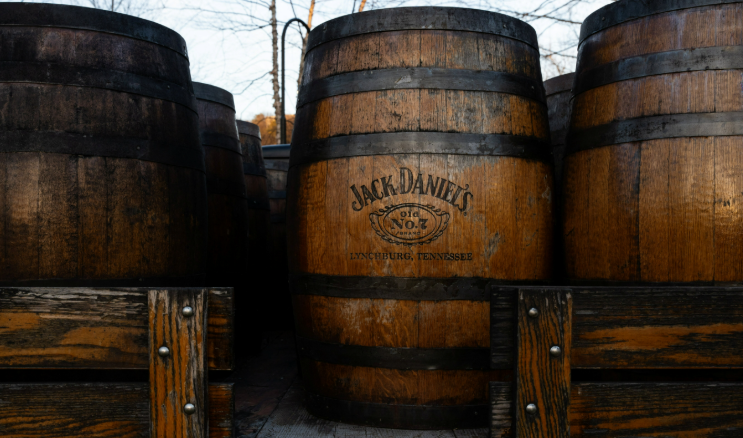
Growth in markets such as Brazil and Turkey, combined with a strong performance in global travel retail, helped offset continued softness in the United States and certain developed countries. Shares rose about 5% in early trading after the results, though they remain down nearly 21% year-to-date.
The company highlighted the contribution of its ongoing restructuring programme, launched earlier this year, which is designed to lower costs and improve operational efficiency.
In the developed international region – representing almost 29% of total sales – volumes declined 4% in the six months ended 31 October, mainly due to weaker demand for Jack Daniel's Tennessee Whiskey in markets including Germany and the United Kingdom.
Brown-Forman noted that a boycott of American-made products in Canada also affected sales of its key whiskey brands in that market during the first half of fiscal 2026.
Higher living costs and economic uncertainty in the United States have led consumers to reduce spending on premium discretionary items such as super-premium spirits.
"We continue to anticipate the operating environment for fiscal 2026 to be challenging, with low visibility due to macroeconomic and geopolitical volatility as we face headwinds from consumer uncertainty and lower non-branded sales of used barrels," Brown-Forman said in a statement.
Net income for the quarter fell 13% year-on-year to $224 million.
Despite near-term pressures in mature markets, the company expressed confidence that sustained investment in its premium portfolio and expansion in faster-growing regions would support long-term performance. Management pointed to continued strength in travel retail and selected emerging economies as important drivers for the remainder of the fiscal year.














 京公网安备 11010802046720号