

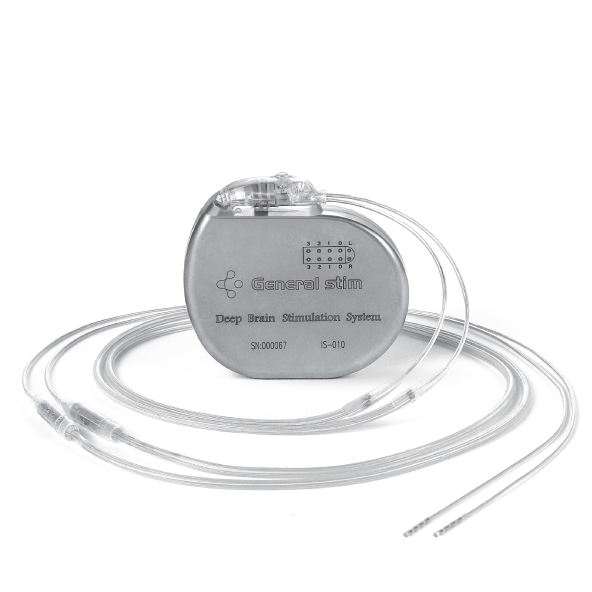
 Nurotron Deep Brain Stimulation System
Deep Brain Stimulation (DBS), also known as the "brain pacemaker," involves implanting electrodes in the brain to deliver weak electrical pulses that stimulate specific deep brain nuclei (such as the internal segment of the globus pallidus GPi, the ventral intermediate nucleus of the thalamus VIM, and the subthalamic nucleus STN). This modulates or restores brain function, alleviating and intervening in disease symptoms.
DBS technology has now become a major clinical therapy for movement disorders such as Parkinson's disease, essential tremor, and dystonia. It has also expanded to treat various other conditions, including Tourette syndrome, obsessive-compulsive disorder, depression, anorexia nervosa, refractory pain, epilepsy, and Alzheimer's disease.





 京公网安备 11010802046720号