

Wedoany.com Report-Apr. 9, Tianjin Port, located in North China, achieved significant growth in the first quarter of 2025, handling over 5.71 million twenty-foot equivalent units (TEUs) of containers. This marks a 5.6 percent increase compared to the same period in the previous year. Alongside this, the port processed 119 million tonnes of cargo, reflecting a year-on-year rise of 1.4 percent. These figures highlight the port’s ongoing role as a key hub for maritime trade in the region.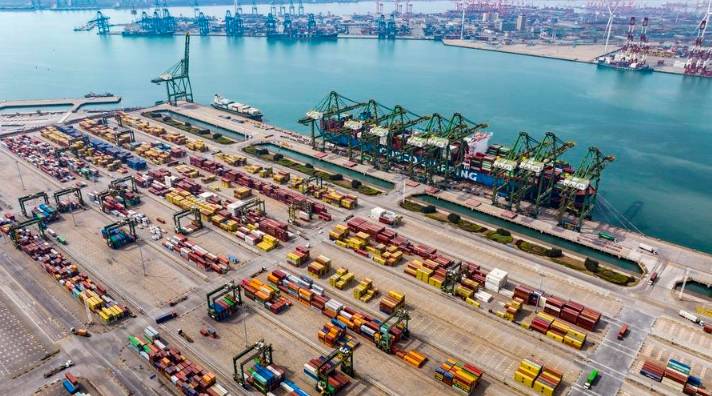
A drone photo taken on April 8, 2025 shows a view of a container terminal of Tianjin Port in north China's Tianjin.
The increase in container volume demonstrates Tianjin Port’s capacity to manage a growing flow of goods efficiently. The 5.71 million TEUs processed between January and March 2025 indicate strong demand for shipping services through this northern gateway. Meanwhile, the cargo throughput of 119 million tonnes underscores the port’s ability to handle diverse types of freight, supporting both domestic and international markets.
This performance builds on Tianjin Port’s established reputation as a vital link in global supply chains. The steady growth in both container and cargo volumes reflects effective operations and infrastructure that accommodate rising trade activity. The port’s strategic location in North China enhances its importance for businesses moving goods across borders and within the country.
Port officials have noted that the first quarter results align with efforts to optimize handling processes and meet market needs. The 5.6 percent uptick in TEUs and 1.4 percent rise in cargo tonnage suggest a positive trend for the year ahead. These gains contribute to the port’s role in facilitating trade, ensuring goods reach their destinations reliably.
Tianjin Port’s achievements in early 2025 reflect its adaptability to evolving demands in the shipping industry. The increase in container handling, reaching over 5.71 million TEUs, paired with the 119 million tonnes of cargo, positions the port as a dependable player in maritime logistics. This progress supports economic activity by streamlining the movement of goods through North China.









 京公网安备 11010802046720号