

Wedoany.com Report-Jun 4, A new onshore power facility at the Oceankaj cruise terminal in Copenhagen, Denmark, was inaugurated on June 2, marking a significant advancement in Northern Europe’s maritime energy transition. The initiative, part of the EU-funded “Coordinated Supply of Onshore Power in Baltic Seaports” project under the Connecting Europe Facility (CEF) for Transport, enables cruise ships at Oceankaj and Langelinie terminals, and ferries at Søndre Frihavn, to access shore-side electricity.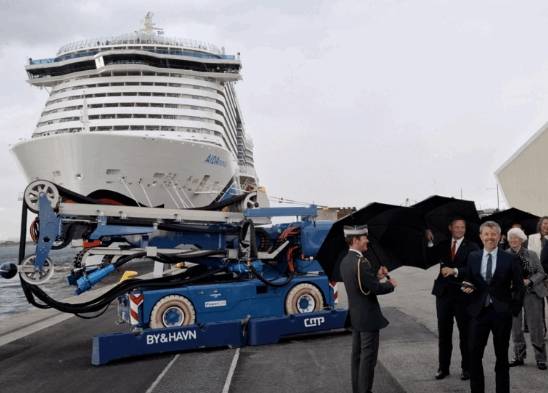
The project, valued at €52 million, received €11 million in EU funding, with €6.6 million allocated to Copenhagen, €1.4 million to Aarhus, and €2.3 million to Stockholm. This facility allows ships to use green electricity while docked, reducing the need to run onboard engines. It is expected to cut approximately 18,000 tonnes of CO2 equivalent annually in Copenhagen, with 17,000 tonnes saved at Oceankaj and Langelinie, and 1,000 tonnes at Søndre Frihavn. Across the three Baltic ports, the project will save nearly 29,000 tonnes of CO2 equivalent yearly, while also reducing air pollutants and noise.
Barbara Scheel Agersnap, CEO of Copenhagen Malmö Port, stated: “The inauguration of the shore power facility for cruise ships in Copenhagen is a proud moment for the Copenhagen Malmö Port and a significant milestone in transitioning the sector to environmentally friendly technologies. This initiative is fully aligned with our broader sustainability strategy, which includes operating the terminal without fossil fuels and aiming to achieve net-zero CO₂ emissions by 2025.”
During the opening ceremony, AIDA Cruises’ LNG-fueled vessel AIDAnova became the first ship to use the shore power facility at Copenhagen, marking the port as the 14th in Europe where AIDA ships can access such infrastructure. AIDA Cruises has 73 scheduled calls by five vessels at the port this year, highlighting the facility’s importance for sustainable maritime operations.
The project aligns with the Scandinavian–Mediterranean corridor, connecting Baltic ports like Copenhagen, Aarhus, and Stockholm to southern Europe. These ports handle over 800 passenger ship calls annually and support regular ferry connections. The adoption of shore power reflects broader European efforts to enhance sustainability in the maritime sector, particularly as over 90% of European ports are in urban areas, where emissions impact local communities. A 2024 report noted that 64% of European ports face climate-related challenges, with 72% working to strengthen infrastructure resilience and 86% integrating climate adaptation strategies.












 京公网安备 11010802046720号