

Wedoany.com Report-Jun 25, The Bulgarian Ministry of Transport is preparing to launch a tender for the procurement of 20 biodiesel-powered passenger trains. The announcement is expected in the coming days, as confirmed by Minister Nikolay Karadjov.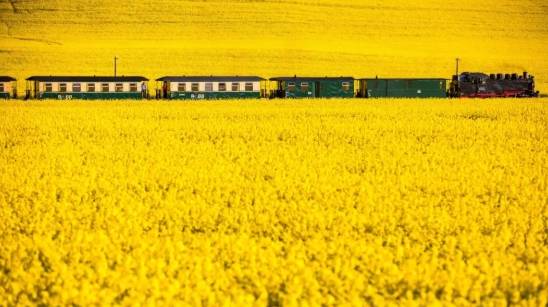
Karadjov stated that adopting biodiesel aligns with tightening environmental regulations and supports progress toward zero-emission transport. He emphasized the practicality of biodiesel in the current energy landscape, pointing out its compatibility with existing diesel engines and infrastructure.
“All fuel distributors are currently obligated to supply a certain percentage of biofuel at each filling station,” Karadjov said. “From now on, we have almost no excuse not to offer biodiesel fuel in every petrol station.”
He highlighted that the expansion of biodiesel use—especially in heavy-duty vehicles, buses, and trains—could drive down production costs and improve its availability. He also projected increased consumption would lead to broader distribution and pricing that could compete with conventional fuels.
In response to questions from the Bulgarian News Agency (BTA), Karadjov confirmed that the cost of producing biodiesel is similar to that of traditional fuels. He noted, however, that in sectors like aviation, where fuel processing requirements are stricter, prices may remain higher.
Karadjov clarified that in standard transportation, the switch to biodiesel does not compromise engine performance. He explained that diesel engines can operate efficiently on biodiesel without requiring modifications, allowing for a smooth transition.
Regarding developments at the EU level, Karadjov mentioned that although the European Union maintains a strong focus on electro-mobility, there appears to be a subtle shift in approach. He suggested that new policy directions could emerge in the near future.
At the recent Transport Council meeting held in Luxembourg, EU leaders engaged in detailed discussions on the role of alternative fuels. The European Commission pledged to deliver a new framework for the period leading up to full electrification. Karadjov stated that this framework should consider biodiesel a key innovation and an important component of the EU’s transitional strategy.
The introduction of biodiesel-powered trains represents a step in Bulgaria’s broader effort to modernize its transportation sector and reduce emissions, while aligning with evolving European transport goals.












 京公网安备 11010802046720号