

Wedoany.com Report-Oct. 13, The United States Bureau of Land Management (BLM) has canceled the Esmeralda 7 solar project, which was planned as the largest solar facility in the country. Located in Nevada, the 6.2 GW initiative would have generated enough electricity to supply nearly 2 million homes. For comparison, the Mammoth solar project in Indiana, currently under phased construction, holds the title of the largest operational facility at 1.3 GW.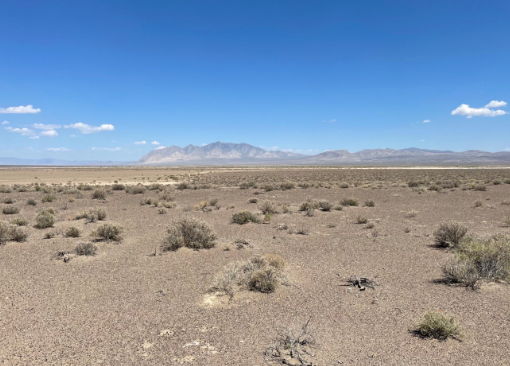
Site of the Esmeralda solar project.
The project's National Environmental Policy Act (NEPA) review process had been paused since the start of the current administration. The BLM website now lists the project as canceled, marking a significant development in federal land use for energy projects.
In July, the Department of the Interior introduced an elevated review process for solar and wind developments on public lands, overseen by Secretary Doug Burgum. This requires additional approvals for leases, rights-of-way, construction plans, grants, consultations, and biological opinions, potentially extending timelines for such initiatives.
Kabir Green, director of federal affairs for nature at the Natural Resources Defense Council, stated: “It is not about oversight, but about unfettered obstruction of wind and solar projects that create jobs, cut pollution, lower costs and strengthen communities. This policy protects select industry profits, not the public interest.”
The Esmeralda 7 project consisted of seven separate developments by NextEra Energy Resources, Leeward Renewable Energy, Arevia Power, and Invenergy. It would have spanned approximately 185 square miles of land, an area comparable to the size of Las Vegas.
This cancellation aligns with recent federal actions on renewable energy. An executive order has directed the Treasury Department to implement stricter qualifications for solar and wind projects applying for federal tax credits. The Environmental Protection Agency has withdrawn $7 billion from the Solar For All grant program, which supported community solar initiatives offering bill savings for low-income households.
Additionally, solar and wind projects on federal lands now undergo final review by Secretary Burgum. Another executive order instructed the Department of the Interior to eliminate any preferential treatment for wind and solar in policies. The U.S. Department of Agriculture has ceased funding for solar projects under the $4 billion Rural Energy for America Program, which aided farms and small businesses.
The administration has also introduced widespread tariffs on various goods, including energy components and materials such as steel and aluminum.
Despite these measures, renewable energy continues to lead in new capacity additions. The Energy Information Administration (EIA) projects a record 64 GW of electric capacity to be built in 2025, surpassing the previous high of 58 GW set in 2002, when natural gas dominated at 57 GW. This year, solar is expected to contribute 33.3 GW, followed by 18.3 GW of battery storage, 7.8 GW of wind, and 4.7 GW of natural gas.
Analyses from Lazard indicate that solar and wind projects have lower levelized costs of electricity than most fossil fuel alternatives, even without incentives. This economic advantage supports their prominence in project queues, fostering growth in clean energy infrastructure amid evolving regulatory landscapes.









 京公网安备 11010802046720号