

Wedoany.com Report-Sept. 5, The prime ministers of India and Singapore delivered speeches yesterday ahead of the inauguration of the phase two expansion of PSA Mumbai, which will become India’s largest container terminal once completed. The development marks a major milestone in the country’s maritime infrastructure growth and highlights deepening cooperation between the two nations.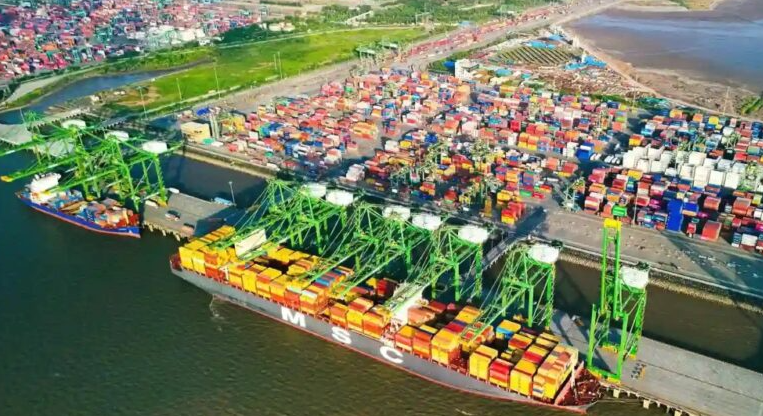
With this expansion, PSA Mumbai will double its annual handling capacity to 4.8 million twenty-foot equivalent units (TEU). The upgraded facility features a continuous quay length of 2,000 meters, designed to accommodate several mega container vessels at the same time. This project represents a $1.3 billion investment committed by PSA under a public-private partnership model and stands as the largest foreign direct investment from Singapore into India.
The expansion of PSA Mumbai is part of India’s broader efforts to enhance container terminal capacity across the country to meet growing trade demands. The government has been prioritizing port modernization and expansion projects to strengthen India’s role in global supply chains. The PSA Mumbai terminal is expected to play a key role in these plans, supporting increased cargo flows and offering improved connectivity for international shipping lines.
Last month, additional investments were announced by other global players. Maersk’s port operating subsidiary, APM Terminals, signed a memorandum of understanding with the Andhra Pradesh Maritime Board to invest $1.1 billion in the development of three major ports in the state. This agreement signals confidence in India’s long-term trade growth and logistics potential.
The country has also drawn interest from Mediterranean Shipping Company (MSC), the world’s largest container carrier. MSC is exploring opportunities to expand its presence in India through multiple port projects. The participation of these leading global operators indicates India’s growing attractiveness as a key hub for maritime trade and logistics.
PSA Mumbai’s second phase underscores the increasing significance of public-private partnerships in India’s infrastructure development. By combining international investment with domestic policy support, the terminal is expected to create efficiencies, reduce congestion, and enhance the competitiveness of India’s ports.
The involvement of Singapore’s PSA in this expansion also reflects the strengthening of economic ties between India and Singapore. As both prime ministers emphasized in their speeches, the project not only represents a major infrastructure achievement but also reinforces the broader strategic relationship between the two countries.
Looking ahead, India’s maritime sector is set to see further growth as global operators continue to explore partnerships and new investments. The PSA Mumbai expansion, with its scale and advanced capacity, is positioned to serve as a central gateway for India’s trade and a model for future port developments.










 京公网安备 11010802046720号